Authenticity: Why Being Real Still Matters in Leadership
Modern leadership is talked about constantly, but lived less often. As expectations of leaders continue to shift, one quality stands out as both timeless and increasingly tested: authenticity.
Authenticity: Why Being Real Still Matters in Leadership
Modern leadership is talked about constantly, but lived less often. As expectations of leaders continue to shift, one quality stands out as both timeless and increasingly tested: authenticity.
Over the past few months at Pratap Executive, we have been exploring what modern leadership really looks like - and how the competencies that drive growth have evolved.

Our Growth Leadership: Six Modern Competencies that Power Growth Boards framework highlights six qualities we see time and again in the most effective leaders: Curiosity, Courage, Empathy, Authenticity, Purpose and Resilience.
Each plays a distinct role, but together they shape cultures where people can do their best work. Of all six, Authenticity is perhaps the most misunderstood - and the one I find myself reflecting on more and more.
Authenticity Is More Than “Being Yourself”
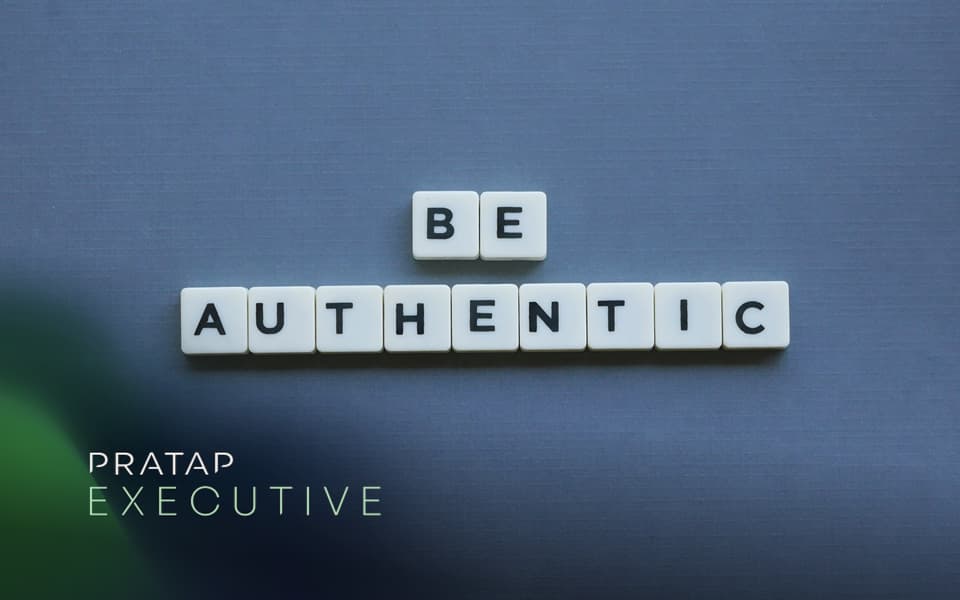
Authenticity is often described as “being yourself”. In reality, it’s much deeper than that.
In leadership, authenticity is about consistency. It’s about alignment between what you say and what you do - how you behave when things are going well and how you show up when they aren’t. It’s about being clear on your values and letting them guide your decisions, even when it’s uncomfortable.
The Performance of Authenticity
In today’s world, it’s never been easier to perform authenticity.
LinkedIn posts are polished. Personal brands are carefully curated. AI can help craft the perfect message. But people are remarkably good at sensing when something does not quite ring true.
Trust erodes quickly when there is a gap between who a leader appears to be and how they actually behave.
Authenticity Under Pressure
During my time leading a cancer charity, authenticity mattered deeply. My team were supporting people at their most vulnerable. They did not need a leader with all the answers or a perfectly composed exterior. They needed honesty, steadiness and clarity.
They needed to know what I stood for - and that my reactions, decisions and communication would be consistent, especially under pressure.
Authenticity does not mean oversharing or leading without boundaries. It means being self-aware enough to lead with integrity. It means acknowledging uncertainty without creating instability. It means being human without losing authority.
Why Authentic Leaders Build Trust
I have seen time and again that authentic leaders inspire confidence not because they are flawless, but because they are trustworthy. People know where they stand. Expectations are clear. Values are lived, not just stated.
Today, in my work with senior leaders and boards, authenticity is one of the qualities I listen for most carefully. It rarely shows up explicitly on a CV, but it becomes clear in conversation. You hear it in how someone talks about difficult decisions, in whether they take accountability, and in how consistent their story is across different contexts.
The Foundation of the Other Competencies
Authenticity also strengthens every other modern leadership competency. It deepens empathy, gives courage credibility, anchors purpose, and allows resilience to feel grounded rather than performative. Without authenticity, the rest can feel hollow.
Authenticity does not mean being the same leader you were ten years ago. Growth often requires change. But the strongest leaders evolve without losing sight of who they are and what they believe in.
A Question for Leaders
If you lead a team, it is worth asking:
- Are my values visible in my everyday actions?
- Do people experience the same version of me in calm moments and difficult ones?
Those small moments of consistency are what build trust over time - and trust is what allows teams to perform, adapt and grow.