Reinvigorated for 2026: A New Chapter for Arif Ahmad
Arif Ahmad is widely recognised as one of Yorkshire’s most influential Big Four leaders, now embarking on a dynamic new chapter after a 28-year career at PwC. As he helps shape Cooper Parry’s northern presence, he brings fresh momentum, clarity of purpose, and a forward-looking perspective on a rapidly evolving profession.
Reinvigorated for 2026: A New Chapter for Arif Ahmad
Arif Ahmad is widely recognised as one of Yorkshire’s most influential Big Four leaders, now embarking on a dynamic new chapter after a 28-year career at PwC. As he helps shape Cooper Parry’s northern presence, he brings fresh momentum, clarity of purpose, and a forward-looking perspective on a rapidly evolving profession.
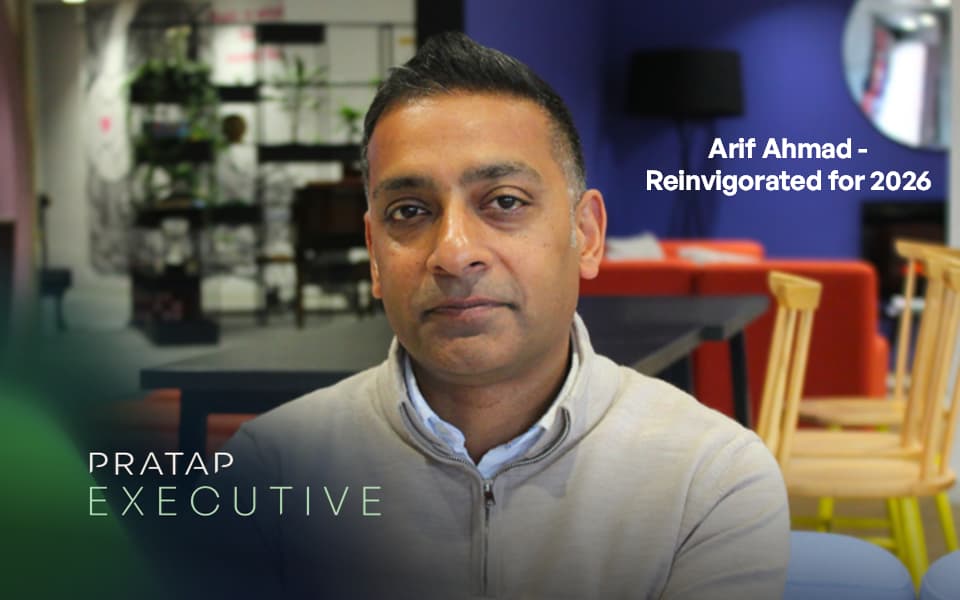
Born in India, raised in Middlesbrough and widely regarded as one of the most influential Big Four leaders in Yorkshire, Arif Ahmad has long been a recognised figure across the northern finance community. His 28-year career with PwC, including 15 years as Partner, came to a close at the start of 2025. We have known Arif for almost 20 years, and as we move towards 2026, we see a reinvigorated leader with more energy, purpose and ambition than ever before. Now shaping a portfolio career and establishing Cooper Parry’s presence across Yorkshire and the North East, Arif is stepping into this new chapter with fresh momentum and a clear sense of direction.
We were keen to speak with Arif at this moment in his journey. His move to Cooper Parry is one of the most notable senior appointments in our region, and his perspective carries real weight. We wanted to hear first-hand what life is like inside one of the most progressive professional services firms in the market, how private equity ownership is reshaping the sector, and why this model is accelerating growth, ambition and innovation. Arif has always been thoughtful, curious and forward looking, so he is the ideal person to help make sense of how these changes will influence the future of the profession.
Tell us about your journey from PwC to Cooper Parry - what options did you consider on leaving PwC and how did you make your decision?
I joined PwC straight from university so it was the only job I’d ever had! That said, I was lucky enough to work in PwC offices in Leeds, London, Chicago and Cleveland and also had a number of leadership roles.
But after 28 years, it felt like the right time to do something different. After a bit of careful thought and some very interesting and varied conversations, that different has been to take on what might be described as a portfolio career.
I’m really excited to have joined Cooper Parry to set up and build the brand in Yorkshire and the North East.
Alongside that, I have an advisory role with a fast growing and very entrepreneurial tech business to prepare for, and oversee, an exit process. I’ve recently opened an indoor facility for padel courts and cricket nets in the centre of Bradford. And I’m a Trustee at Harewood House Trust and have just started as a Governor at St Peter’s School, York.
I have always been someone who has pushed my boundaries and challenged myself so I wanted whatever I did next to hold true to that. And the opportunity to build something in a region I’m passionate about was too good to turn down with Cooper Parry.
Cooper Parry proudly describe themselves as the rebels of accountancy. Have they managed to unlock an inner rebel in you, or has that side always been there?
Ha, it’s a question a few people have asked. Accountants aren’t natural rebels are they and I’m not sure many of my friends would describe me as a rebel!
For me, the rebels tag speaks to embracing difference and really challenging the status quo. From the minute you walk into the Cooper Parry head office next to East Midlands Airport, it genuinely feels different. The brand is bold and exciting, there’s music playing in the offices. But like any professional services business, it’s the people that define the culture. I met some fabulous people through the recruitment process and since I’ve joined.
There’s a real focus on growth, an energy and a positive, collaborative vibe that you feel right from Day 1. Some will dismiss this as a bunch of gimmicks – my welcome pack had the words “You Rock. This is How We Roll” across the front.
The move has definitely reinvigorated me, to build something, to disrupt and be out there in the Yorkshire business community which I have always loved doing. That’s my take on being a rebel!
Cooper Parry are one of the most successful examples of US private equity investment into the professional services sector, with Lee Equity Partners investing in 2024 and taking over from Waterland. How do you see private equity ownership influencing the firm’s future - and what impact do you think this model will have on the wider professional services sector?
Who’d have thought we’d be talking about accountancy being an interesting sector but it really is with private equity putting major investment into a number of firms.
What Waterland and now Lee Equity Partners have brought to Cooper Parry is transformational growth to support the ambition of being a leading accountancy firm in the UK. Waterland oversaw a quadrupling in size of the firm in two years, and already Lee Equity Partners has backed us with five deals in a few months, and that’s 17 acquisitions for Cooper Parry since early 2023 which is incredible.
But it is not just about M&A, the investment also gives firepower to make statement hires at a senior level. And Cooper Parry has been growing organically at over 20% per annum. A laser like focus on making it a great place to work so our people are motivated to do the best job for our clients helps retention and fuels further growth as our clients experience Cooper Parry and recommend us to others.
With growth, its super important to integrate quickly while protecting the culture that has made Cooper Parry as successful as it has been.
The model is different from the conventional partnership model and is reshaping the profession, at a time when many firms are already grappling with the pace of change that technology brings and what people want from a career now. Which all makes it even more important to lead through this change, delivering for your people and your clients. The firms that get that right will emerge as the winners, and no doubt be even more attractive to attract further investment as the sector continues to consolidate.
Looking back over your career - from your early days at PwC to now leading a new region for Cooper Parry - how much of your success has come from deliberate planning versus taking opportunities as they arose? What advice would you share with others in professional advisory about shaping their own careers?
One of the core values I talk about a lot is having two arms for a reason, one to reach up and constantly try and better yourself and one to reach out and help others.
So my plan was to be the best I can be, but then it wasn’t so specific as achieve this or do that by a certain date. You’ve got to be open to new opportunities and be agile and flexible to embrace those as they arise.
Then surround yourself with people whose advice you trust, whether that be sponsors, mentors, friends or anyone else! People who you can turn to when you need a bit of support or guidance, but also people who can tell you when you’re being daft or not open minded.
And all the time focus on what you can do to help others as well, as that is both rewarding but also brings different perspectives that can only enhance you.
But above all, do it your way and stay true to your core beliefs and values. That’s where the profession really has changed, it’s now much more diverse and open to difference. Of course, there’s still more to do on that front but a lot of progress has been made.
You are balancing a demanding new leadership role with your own consultancy interests, property ventures and family life. How do you approach time management and balance, and what have you learned about sustaining energy and perspective along the way?
I’ve always been someone with a lot of energy and thrive on being busy and challenged, I find I have more energy in those situations rather than less.
During my time at PwC, I often had a number of different roles which I needed to balance along with family life. So in a way, it’s no change now, I’m still involved in a few different things, just for different organisations rather than one.
I definitely haven’t got the balance right over the years, probably the biggest turning point for me was when we started a family. I then shifted to working hard during the week but protecting weekends for family. While weekends were still busy in a different way, I did find that I was generally more refreshed coming into a Monday from having had a proper break from work. That was even more important the years when I was working in London during the week and home in Yorkshire at weekends, those weekends it was vital that I was present and available for my wife and children.
Of course, there are still times when I don’t get it right.
But what I have found works for me is having my non-negotiables, the things I won’t move. Flexible working can be taken to mean working less hours. It isn’t that, its having the licence to work as hard you need to at any given time but doing it in a way that works for you, for your clients, and for your other commitments.
What can you tell us about your work as a Governor at St Peters and your role as a Trustee at the Harewood House Trust?
I reached the stage in my career some time ago where giving back became a real priority for me. It is incredibly humbling to be approached by organisations of the calibre of St Peters and the Harewood House Trust, and even more so when you feel you can make a genuine difference.
I also recognise that some of these opportunities have come my way because of my ethnicity, and I think it is important to talk about that openly. I was the first non-white partner at PwC north of Birmingham as recently as 2009, and at that time there was only one in Birmingham. Things have moved on a lot since, which is great to see, but it still highlights the journey we are on to create truly equitable workplaces.
For me, the term positive discrimination muddies the waters. That is not the point. The aim should always be to create a level playing field so that, at the end of the process, the best person gets the job. What matters most is diversity of thinking, and that comes from bringing together people with different backgrounds and experiences across ethnicity, gender, age and many other factors. Organisations that embrace that will always be stronger for it.
It is great to see you back full time in Yorkshire and the North East - two regions with so much momentum and potential. How do you see their economic prospects developing over the next few years, and where do you think the biggest opportunities lie?
These are regions I’m very passionate about and have huge affinity to. My family moved from India to Middlesbrough when I was 1, I went to university in Newcastle and moved to Leeds in 1996 when I started my career as an accountant.
We have a strong bedrock in many sectors already, areas like industrial manufacturing, professional services, financial services, creative industries and retail and consumer, boosted by some stunning scenery that attracts tourists. But we’ve also built up a great reputation for embracing new areas and have some amazing tech-based businesses that started or are headquartered here.
It’s well documented but our core infrastructure needs attention, particularly connectivity between our major cities. That investment in itself will drive growth and opportunity which we need to harness.
Those who know me know I’m a big cricket fan and in cricket there’s a saying that a strong Yorkshire means a strong England. In economic terms, a strong Yorkshire and the North East will mean a strong United Kingdom!