From Transformation Leader to Fractional Operator: Why Experienced Leadership Matters More Than Ever
Following the launch of her advisory and fractional leadership business, Amy Archer reflects on the experiences that shaped her career, the rise of fractional leadership, and why experienced operational leaders are more valuable than ever.
From Transformation Leader to Fractional Operator: Why Experienced Leadership Matters More Than Ever
Following the launch of her advisory and fractional leadership business, Amy Archer reflects on the experiences that shaped her career, the rise of fractional leadership, and why experienced operational leaders are more valuable than ever.
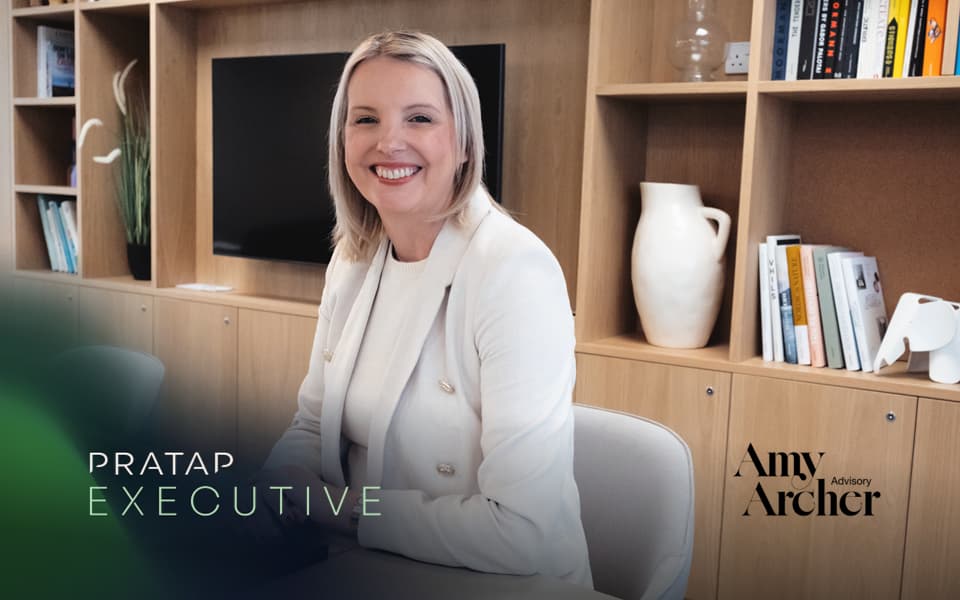
After more than two decades leading growth, transformation and operational excellence in complex manufacturing environments, Amy Archer has launched a new advisory and fractional leadership business. Having progressed from frontline customer service roles to executive leadership, she brings a rare combination of commercial discipline, operational expertise and people-centred leadership.
In this interview, she reflects on the experiences that shaped her career, the rise of fractional leadership, and why strong operational leadership has become one of the most valuable assets businesses can access today.
Looking back across your career, what experiences most shaped the leader you are today?
The experiences that shaped me as a leader span both my professional and personal life.
Professionally, it started right at the beginning. I began my career in a frontline customer service role and, although I didn’t fully appreciate it at the time, that experience gave me an invaluable foundation. I worked hard, volunteered for projects outside my remit and was genuinely curious about how the business operated. That curiosity helped me understand how different functions connected and how decisions were made across the organisation.
As my career progressed, I became involved in large-scale transformation programmes. One of the most significant was a complete redesign of a pay and skills framework affecting more than 700 employees. It was a four-year programme with major operational, financial and cultural implications. Leading something of that scale taught me discipline, resilience, tenacity and the importance of balancing commercial outcomes with long-term cultural sustainability.
Of course, leadership growth rarely comes without mistakes. Some of my greatest learning came from projects that didn’t go exactly to plan. Those experiences taught me how to navigate complexity, make better decisions and lead through uncertainty.
Personally, some of the most defining experiences happened outside the workplace. Becoming a mum at a young age made me determined, focused and motivated to succeed, and it shaped the drive that’s stayed with me throughout my career. Later, experiencing the loss of my baby son fundamentally changed my perspective. It built a deep inner strength in me that has been instrumental in my leadership ever since, helping me show up with more humanity, more steadiness and a greater awareness of the pressures people carry beneath the surface. These personal experiences built a level of resilience that no professional challenge could replicate.
The pandemic was another pivotal chapter. Manufacturing businesses faced constant disruption, and leaders were required to make critical decisions with imperfect information. That period reinforced the importance of clarity, honesty and humanity in leadership.
When I look back, all of these experiences combined have shaped who I am today: commercially focused, resilient, authentic and deeply aware that behind every role is a human being doing their best.
After a successful executive career, what prompted the decision to launch your own advisory and fractional leadership business?
It felt like a natural evolution.
I’d spent more than twenty years leading growth, restructuring and transformation within a large manufacturing organisation. Manufacturing is a demanding environment that exposes you to every aspect of business performance, from operations and people to customers and commercial outcomes.
Over time, I realised I wanted to apply that experience more broadly. While industries may look different on the surface, the fundamentals of leadership remain consistent: clarity, execution, culture and accountability.
Launching my own advisory and fractional leadership business allows me to support organisations across different sectors and stages of growth. It enables me to bring fresh perspectives, create impact quickly and help leaders navigate complex challenges without the commitment of a permanent executive appointment.
I’m not ruling out a future executive role, but right now building a portfolio career gives me the variety, challenge and opportunity to make a meaningful contribution across multiple organisations. It feels like the most effective way to utilise my experience while continuing to learn and grow myself.
Operational leadership is becoming increasingly critical. Why are companies placing more value on experienced operators than ever before?
The reality is that business has become significantly more complex.
Technology is evolving rapidly. Supply chains can shift overnight. Geopolitical uncertainty, sustainability expectations and regulatory pressures are all increasing. At the same time, organisations are trying to navigate AI adoption, changing workforce expectations and widening skills gaps.
Leaders are being asked to balance short-term performance with long-term sustainability, often while making decisions in environments where certainty simply doesn’t exist.
That’s where experienced operators add enormous value. They bring judgement, execution discipline and the ability to navigate complexity without losing sight of commercial outcomes. They know how to lead people through change while keeping the business moving forward.
That said, experience alone isn’t enough. The most effective operators remain curious. They challenge their own assumptions, stay open to new ideas and continually adapt their thinking. Experience becomes valuable when it’s combined with a willingness to keep learning.
Why is the fractional leadership model becoming so attractive to founders, CEOs and investors?
Fractional leadership gives organisations access to senior expertise without the cost and long-term commitment of a full-time executive hire.
Many businesses know what needs to happen but lack the operational bandwidth or leadership capability to deliver it. A fractional leader provides targeted support exactly where it’s needed and for as long as it’s needed.
There’s also tremendous value in the breadth of experience fractional leaders bring. Having worked across different industries, business models and economic cycles, they’ve often seen similar challenges before and can apply proven approaches quickly.
For founders, CEOs and investors, that external perspective can be invaluable. Rather than hiring a generalist, they can access highly specific expertise to address challenges such as operational inefficiency, margin pressure, leadership development or growth execution.
From the leader’s perspective, the model also creates space to think more objectively. Without being immersed in day-to-day operational demands, you can often bring greater clarity, fresh thinking and sharper judgement.
That combination benefits both organisations and leaders, which is why the model continues to gain momentum.
When organisations bring you in, what challenges are they most commonly facing?
The biggest challenge I’m seeing is the tension between delivering today’s performance and preparing for tomorrow’s opportunities.
Business leaders are under intense pressure. Costs are rising, teams are stretched, margins remain tight and consumer confidence is fragile across many sectors. Many leaders describe feeling pulled in multiple directions while trying to balance immediate operational demands with strategic priorities.
Despite those pressures, I’m also seeing incredible creativity and determination. Organisations are embracing technology, exploring AI and looking for new ways to improve efficiency and performance.
Where I add value quickly is in helping leaders gain clarity about what is really happening in their organisation.
My approach is based on triangulation. I listen carefully to what people are saying, observe how the organisation operates and analyse the underlying data. When you combine those three perspectives, you quickly gain clarity about where the real issues exist.
One of the biggest lessons I learned earlier in my career was never to assume where the problem is. The visible symptoms are often not the root cause. By engaging directly with people across the organisation and grounding decisions in data, you can identify the interventions that will create the greatest impact in the shortest time.
You’re known for combining commercial focus with a people-centred leadership style. How important are culture and leadership behaviours in driving long-term performance?
Culture is fundamental.
You can have the best strategy in the world, but if the culture isn’t aligned, performance will always fall short.
When accountability is unclear, behaviours are inconsistent or people don’t feel supported, the consequences quickly become visible in employee engagement, retention, absence levels, customer experience and overall business performance.
Too often, organisations focus on superficial improvement initiatives while overlooking the deeper foundations that drive sustainable performance. The things that really matter are clear expectations, strong leadership, meaningful feedback, role clarity and consistent behaviours.
Leadership is what shapes culture.
Leaders set the pace, establish standards and create the environment in which people either thrive or struggle. One of the best pieces of advice I was ever given was never to let standards slip, especially when pressure is highest.
I often remind leaders that people are not chess pieces to be moved around a board. They are human beings with families, ambitions, concerns and emotions. If we want people to adapt, perform and stay engaged, we have to lead them with integrity, humility and respect.
When culture is built on clarity, consistency and trust, it becomes one of the most powerful drivers of long-term value creation.
In challenging market conditions, how can strong operational leadership unlock growth as well as efficiency?
Cost control and efficiency are important, particularly during difficult periods, but they’re only part of the story.
Strong operational leadership goes beyond reducing costs. It creates the conditions for growth by encouraging curiosity, challenging assumptions and helping organisations rethink how they operate.
I believe leaders should continually examine every aspect of the business. Just because a process isn’t broken doesn’t mean it’s delivering the best possible outcome. Sometimes the greatest opportunities come from questioning long-held assumptions and exploring alternatives.
That doesn’t always require significant investment. Often it’s about identifying smaller, more achievable initiatives that can deliver meaningful progress. It may involve stopping activities that no longer create value in order to free up resources for more strategic priorities.
The most effective leaders balance operational discipline with imaginative thinking. They understand when tough decisions need to be made, but they also recognise opportunities others might overlook.
Ultimately, operational leadership today is about helping organisations strengthen their foundations while also creating a vision for what comes next. The businesses that thrive will be those that combine disciplined execution with curiosity, creativity and decisive action.
Conclusion
As businesses continue to navigate economic uncertainty and rapid change, experienced operational leadership has become a strategic advantage. Amy Archer's insights highlight the value of combining commercial expertise with people-centred leadership, demonstrating how the right experience can help organisations drive performance, embrace change and build sustainable long-term success.

Partner