Beyond the Boardroom: David Broadbent's Next Chapter in Leadership
After a distinguished executive career, David Broadbent has entered a new chapter focused on coaching, advisory work and helping leaders navigate complexity. In this conversation, he reflects on the lessons learned from the boardroom, the qualities that define effective leadership, and how finance professionals can create lasting business value.
Beyond the Boardroom: David Broadbent's Next Chapter in Leadership
After a distinguished executive career, David Broadbent has entered a new chapter focused on coaching, advisory work and helping leaders navigate complexity. In this conversation, he reflects on the lessons learned from the boardroom, the qualities that define effective leadership, and how finance professionals can create lasting business value.
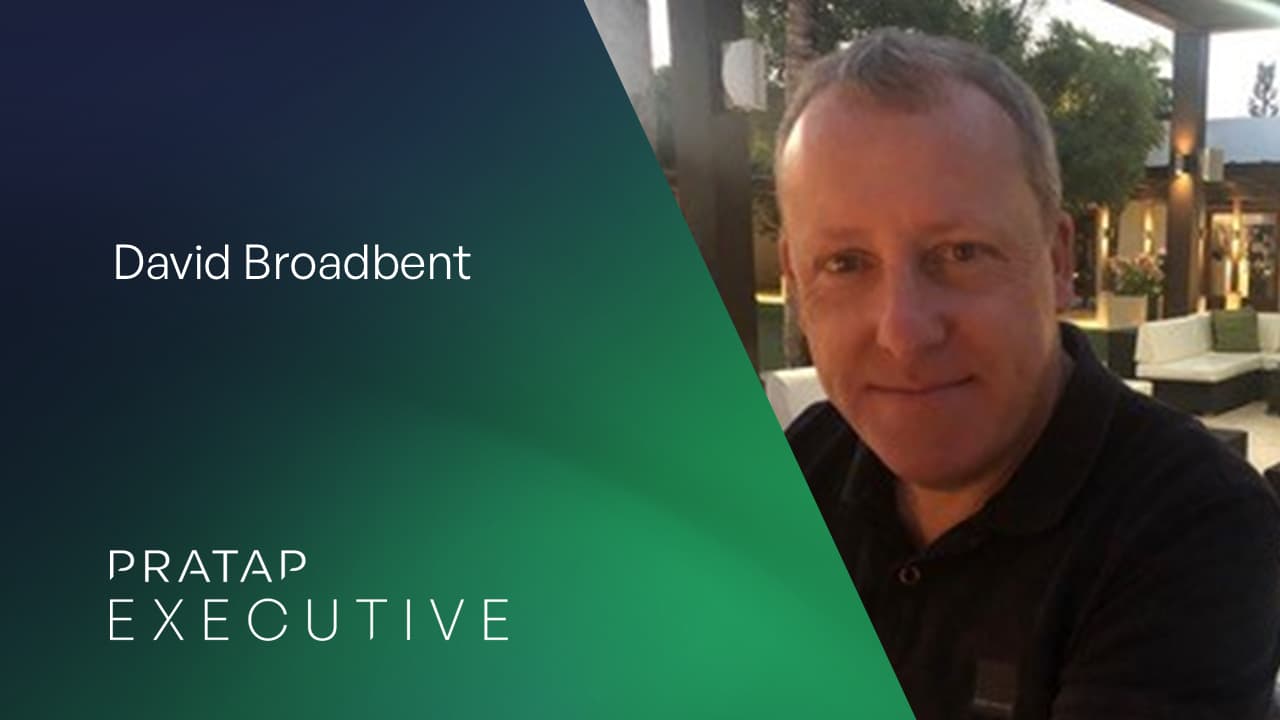
David Broadbent has had the kind of career that gives him a rare perspective on leadership, finance and business value.
He has held senior board roles as CFO, CEO, COO and CCO across PLC, banking, financial services and professional services environments. His career has included IPO, M&A, transformation, turnaround, restructuring, refinancing and the creation of high-performing finance teams. He was CFO of International Personal Finance through its demerger and IPO, played a key role in navigating the Global Financial Crisis, led major transformation work, co-founded Bank North, and stepped into CEO responsibilities during a significant turnaround at Fairpoint.
David is now building a coaching and advisory portfolio, supporting leaders and finance professionals by combining deep technical experience with the ability to simplify complex situations, challenge thinking and help people perform at their best.
That makes this a particularly interesting conversation. It is not just about what a great CFO or CEO does in the role. It is about what that experience teaches you once you step back from a single executive seat and start helping other leaders, founders and finance teams make better decisions.
You have moved from a highly successful executive career as CFO, CEO, COO and founder into a portfolio career combining coaching, advisory and fractional finance work. What prompted that transition, and what have you found most energising about this next stage?
I’ve reflected on this a lot and I think that things changed for me from being a co-founder of Bank North, where we had a blank piece of paper to create something new, different and with a truly special culture. After that, it’s hard not to look back and compare – so it was time to do something completely different.
I’ve always enjoyed leadership development at both an individual and team level and I’m curious about what motivates people to act in the way they do – for both good and bad. So, the idea of coaching was something with immediate appeal and I can honestly say I am loving it.
Having operated at board level for many years, what do you now see differently when you are supporting a business from the outside rather than carrying the executive responsibility yourself?
When you are on the inside, it’s like being in a fast-moving river (or sometimes in a washing machine in a spin cycle). This means that time is in short supply and when that is the case, communication can go awry and it is difficult to focus on anything other than the tasks and to do list in front of you.
When you’re on the outside, the distance can make it easier to see repeat patterns and feel emerging themes. Having an independent sounding board can be really valuable to the executive – just talking through a situation and asking the simplest of questions helps them better navigate a way forward.
There is an interesting overlap between being a fractional FD / CFO and being a coach. Both roles involve judgement, challenge, trust and helping leaders make better decisions. Where do you see the strongest similarities, and where are the boundaries different?
Building effective relationships and stakeholder management is so important in both. To be honest, I probably spend most time on this area with my coaching clients and their interactions with investors, boards, execs, regulators and team members. If you can build effective relationships based on trust it’s so much easier to influence and help people make good decisions.
As you allude to in the question – the boundaries are totally different. As an exec, you are accountable. As a coach, the client is accountable and your job is to help them clarify where they are, where they want to be and evaluate what options they have – I like to think that I have a lot of practical experience to bring to these interactions but I admit that sometimes I have to bite my lip and not drop into suggestion mode. When it goes well though, seeing someone have a ‘eureka’ moment is so rewarding.
You have significant experience around financial due diligence, fundraising, IPO, refinancing, M&A and investor-facing work. From that perspective, what are the main lessons entrepreneurs should learn if they want to maximise the value they create in their business?
- Keep the story and investment thesis clear and simple – what are the 3-5 things that the investor needs to believe - and then back it up with relevant and compelling evidence.
- Put effort into preparing a quality data room with quality information – don’t just include what you have to hand. You only get one chance to make a first impression.
- Growth and turnover is of course super important – but so is the generation of operational cash flow. Be prepared for questions on your ability to turn profit into cash, margin structures etc. Take any tough decisions on cost before the transaction to maximise value.
- Finally -I would say this wouldn’t I – but invest in a strong CFO/FD and finance function that ensures that cashflow and profitability is optimised, the right KPIs are tracked and challenged, efficiencies are delivered and that the business is presented in the best possible light come transaction time.
Unfair question to anyone! What are your predictions for the economy and for the SME sector over the next few years?
There are always winners and losers depending on the sector, but I am pretty pessimistic in the near term. It seems pretty clear that Andy Burnham will be our new Prime Minister - I met him when we set Bank North up in Manchester and I liked him - and I just hope he chooses a pro-business Chancellor. Longer term, and I know this might be contentious, but we need to materially cut our welfare bill to support pro-growth investments.