CFO Network Quarterly Executive Finance Market Intelligence - July 2026
The latest data for CFO and Finance Director appointments across Yorkshire and the East Midlands.
CFO Network Quarterly Executive Finance Market Intelligence - July 2026
The latest data for CFO and Finance Director appointments across Yorkshire and the East Midlands.

Executive summary
Q1 2026 was the first quarter in more than three years where CFO and FD appointment volumes across Yorkshire and the East Midlands showed a meaningful decline. The Q1 report recorded a 33% decrease against the previous quarter, a 38% decrease against the same quarter last year and the lowest appointment numbers since Q1 2023.
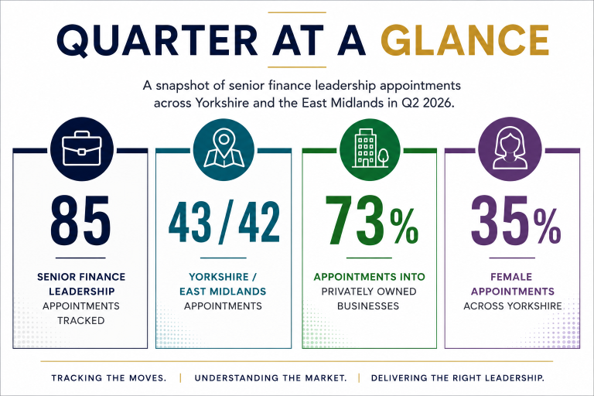
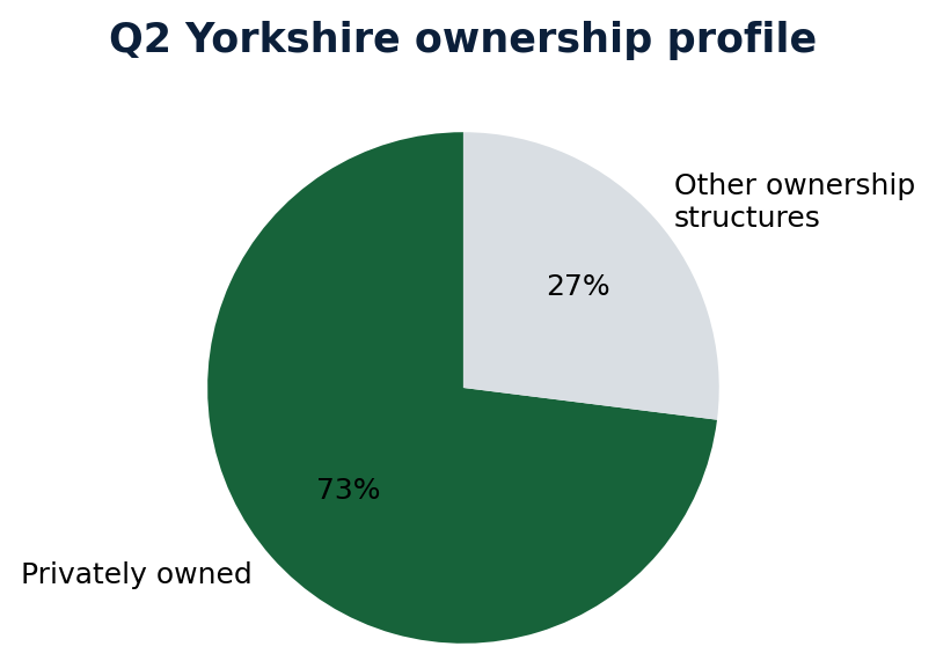
Q2 tells a more encouraging story, but not a simple rebound story. Across Yorkshire and the East Midlands, we tracked 85 senior finance leadership appointments during March, April and May 2026. Yorkshire recorded 43 appointments, representing a 38% increase on the previous quarter, although still 16% below the same period last year. East Midlands activity was broadly equal in volume, with 42 notable appointments tracked.
The better description of the market is stabilisation rather than acceleration. Businesses are recruiting again, but they are still making decisions carefully. The market feels active, but more deliberate.
Quarter at a glance
The headline narrative
- Q2 activity improved materially from the Q1 low point, particularly in Yorkshire where appointments increased by 38% quarter on quarter.
- Despite this improvement, the market is not yet back to the levels seen through much of 2024 and 2025.
- Manufacturing, engineering and industrial businesses remain the strongest source of senior finance appointments, but their share has normalised from the unusually high Q1 level.
- Privately owned businesses continue to drive the majority of activity, with many investing in finance leadership to support governance, growth, succession and future investment readiness.
- The CFO brief continues to broaden, with commercial leadership, systems, data, transformation and operational influence now appearing in most senior finance conversations.
Q1 to Q2: What changed?
The Q1 message was caution, but not panic. The overview highlighted that one weak quarter does not create a trend and that the 10% rolling twelve month decline was more meaningful than the headline quarterly movement. Q2 supports that view. Appointment levels have improved and the market has not continued to fall, but the recovery remains measured.
The most useful conclusion is that many delayed decisions are now beginning to move, rather than cancelled searches suddenly returning at pace. Boards are still taking longer to appoint, but the level of engagement from businesses, investors and candidates is stronger than it was at the start of the year.
Gender diversity
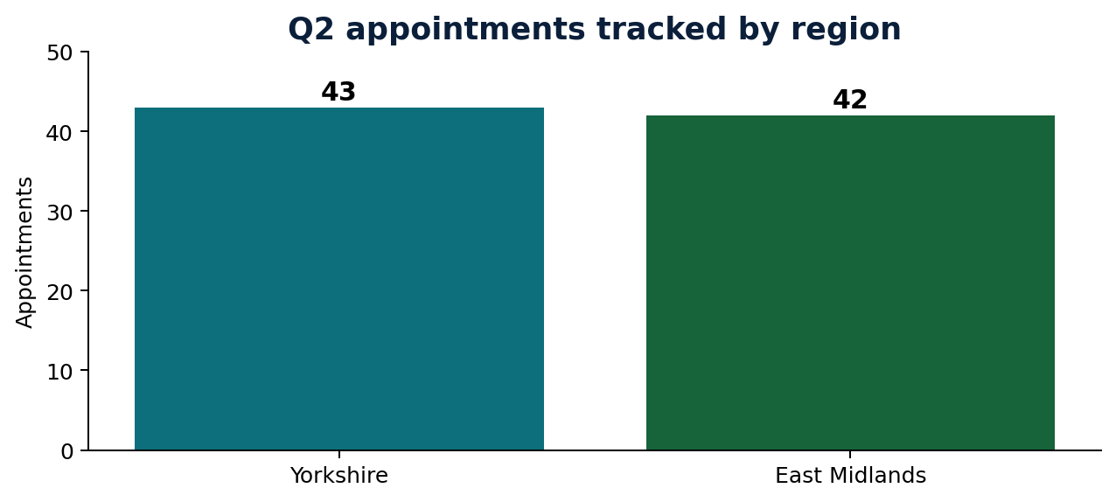
Q1 recorded 40% female representation across the combined Yorkshire and East Midlands appointment data, the strongest female representation since tracking began and ahead of the three year average of 29%. Q2 Yorkshire data records female appointments at approximately 35%. This remains above the historic average, although lower than the exceptional Q1 position.
Where hiring was strongest
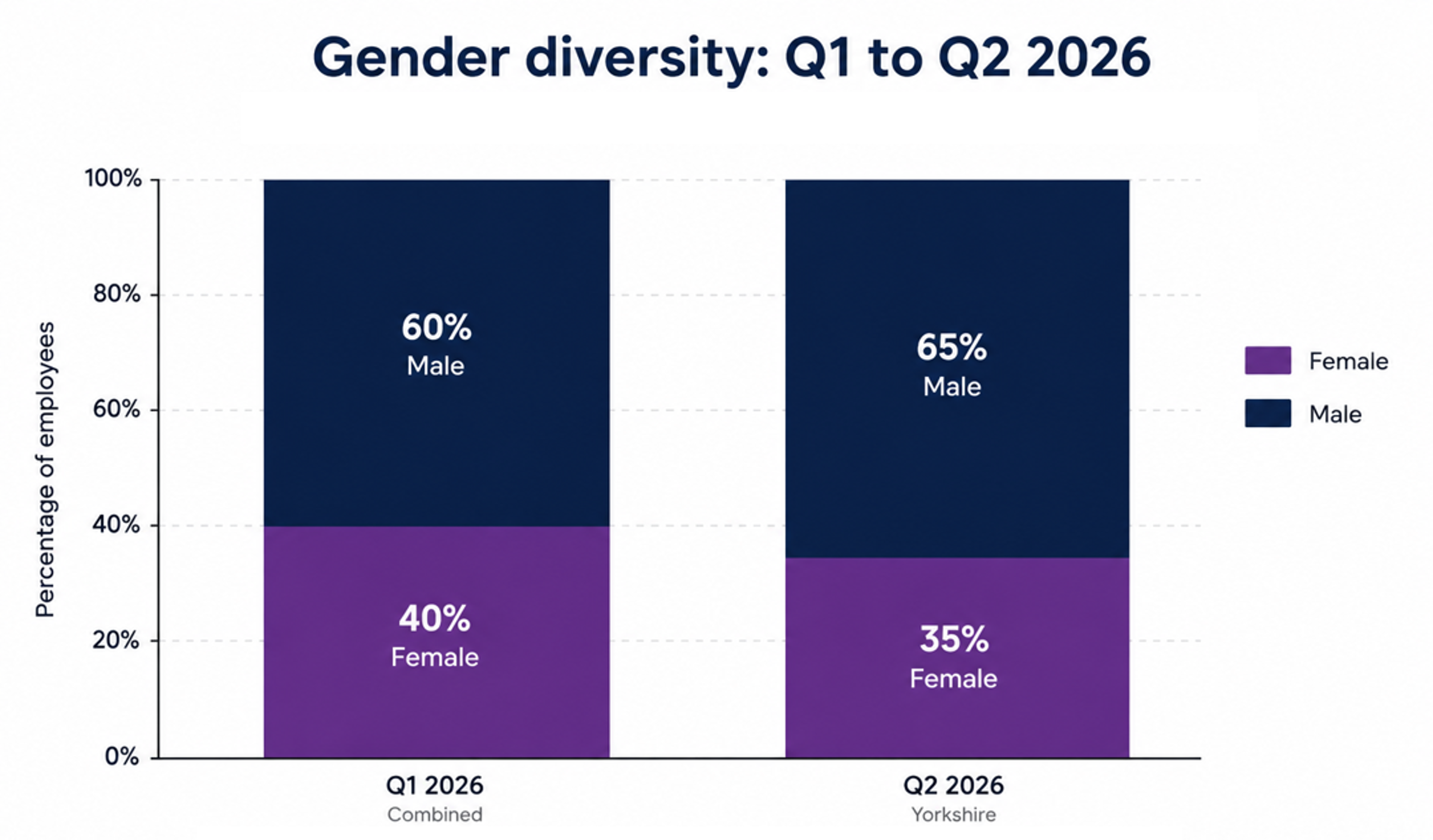
Manufacturing and engineering remain the most active part of the market. In Q1, manufacturing and engineering accounted for 45% of appointments. In Q2, the Yorkshire figure was 37%, still the largest sector group, but suggesting a slightly broader spread of activity across construction, technology, services, education, healthcare and consumer related businesses.
This is an important distinction. Manufacturing has not weakened as a source of demand. Rather, the Q2 data suggests that activity has broadened after a particularly manufacturing heavy Q1.
Ownership trends
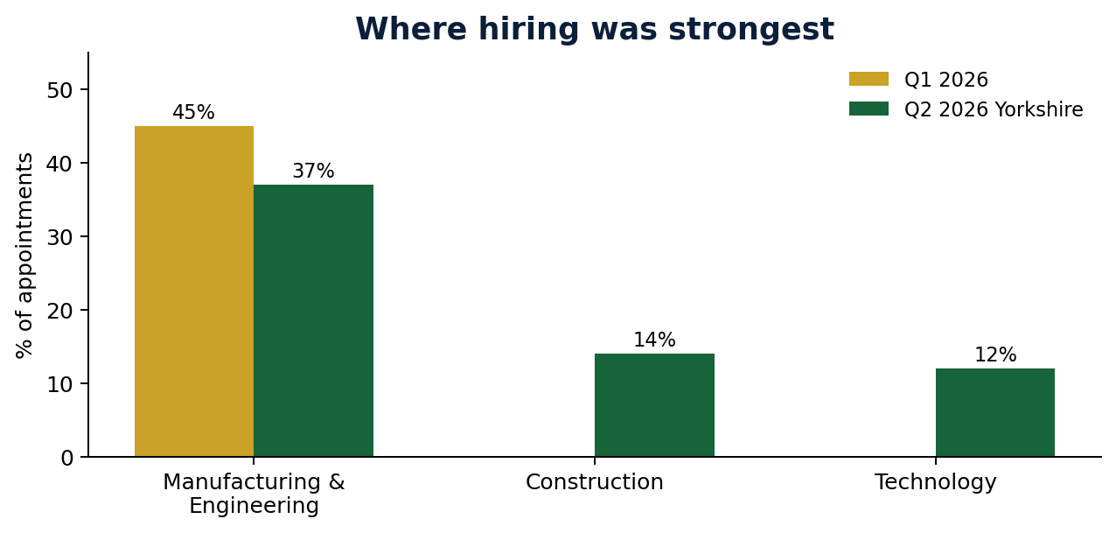
Privately owned businesses remain the engine room of the regional CFO and FD market. Q2 Yorkshire data shows approximately 73% of appointments sitting within privately owned businesses. This is not directly comparable with the Q1 ownership cut, which separated PE, VC, privately owned and other structures, but it reinforces the same underlying theme: the most active hiring market is still entrepreneurial, investor influenced and privately held.
Regional analysis
The Q1 update highlighted the breadth of activity beyond Leeds, Sheffield and Nottingham. Q2 continues that theme. Yorkshire appointments were spread across Leeds, Sheffield, York, Wakefield, Doncaster, Hull, Bradford, Chesterfield, Halifax, Harrogate and other regional centres. East Midlands activity was particularly strong across Leicester, Nottingham, Derby, Lincoln, Mansfield, Grantham and Loughborough.
This reinforces one of the most attractive features of the regional executive finance market. CFO and FD opportunities are not limited to the largest cities. They are embedded across industrial corridors, university cities, distribution centres, manufacturing locations and privately owned business communities.
The role is broadening
The Q2 movers data includes a wide spread of titles: CFO, Finance Director, Group Finance Director, Director of Finance, Head of Finance, Finance and IT Director, Finance and Operations Director and Transformation Director. This matters. The job title may differ, but the expectations are converging.
- Boards want stronger commercial challenge and better forward looking insight.
- Investors and lenders want greater visibility of cash, forecasting and performance drivers.
- CEOs want finance leaders who can improve systems, data and operational decision making.
- Privately owned businesses want leaders who can professionalise finance without losing pace or pragmatism.
Interim and fractional leadership

The Q1 update noted that interim finance leadership had continued to build steadily and that approximately one in five CFO hires had been fractional over the past year. That theme remains relevant in Q2. The permanent market has improved, but businesses are still using interim and fractional support where they need pace, specialist transformation capability, investor readiness or short term financial leadership before committing to a permanent appointment.
What we are hearing
Salary - Salary inflation has stabilised compared with the sharper movement seen through 2024 and early 2025. Candidates still expect competitive packages, but culture and role quality are now just as important.
Process - Recruitment processes remain longer. This is usually driven by more stakeholders, more assessment and a greater focus on getting the appointment right.
Transformation - Systems, data, AI and reporting quality are now regular parts of CFO and FD briefs. This is no longer a niche requirement.
Private capital - Investor backed and investor ready businesses continue to value CFOs who can support growth, funding, M and A, exit planning and value creation.
Candidate behaviour - The best CFO and FD candidates remain selective. They are attracted by quality of leadership, clarity of strategy and the ability to influence at Board level.
Looking ahead
We expect finance leadership recruitment to remain steady through the second half of 2026. We do not expect a sharp bounce, but the Q2 data suggests that the market has stabilised after the quieter start to the year. The strongest demand is likely to remain across manufacturing, engineering, privately owned businesses, investor backed organisations and businesses preparing for change, funding or succession.
The organisations that secure the strongest finance leaders will be those able to move decisively, articulate the opportunity clearly and demonstrate where the CFO or FD can make a meaningful difference. In a measured market, clarity and pace are becoming competitive advantages.
About Pratap Executive
At Pratap Executive, we partner with Boards, investors and business leaders to appoint exceptional CFOs, Finance Directors and executive finance leaders across Yorkshire and the East Midlands. Through our search activity and extensive regional network, we maintain a unique perspective on leadership movement and emerging market trends.