Jonathan Simms on Yorkshire’s M&A Market: Complexity, Confidence and Opportunity
Jonathan Simms, Corporate Partner at Clarion, shares his insights on Yorkshire’s evolving M&A landscape, exploring deal activity, investor appetite and how businesses can position themselves for growth or exit.
Jonathan Simms on Yorkshire’s M&A Market: Complexity, Confidence and Opportunity
Jonathan Simms, Corporate Partner at Clarion, shares his insights on Yorkshire’s evolving M&A landscape, exploring deal activity, investor appetite and how businesses can position themselves for growth or exit.
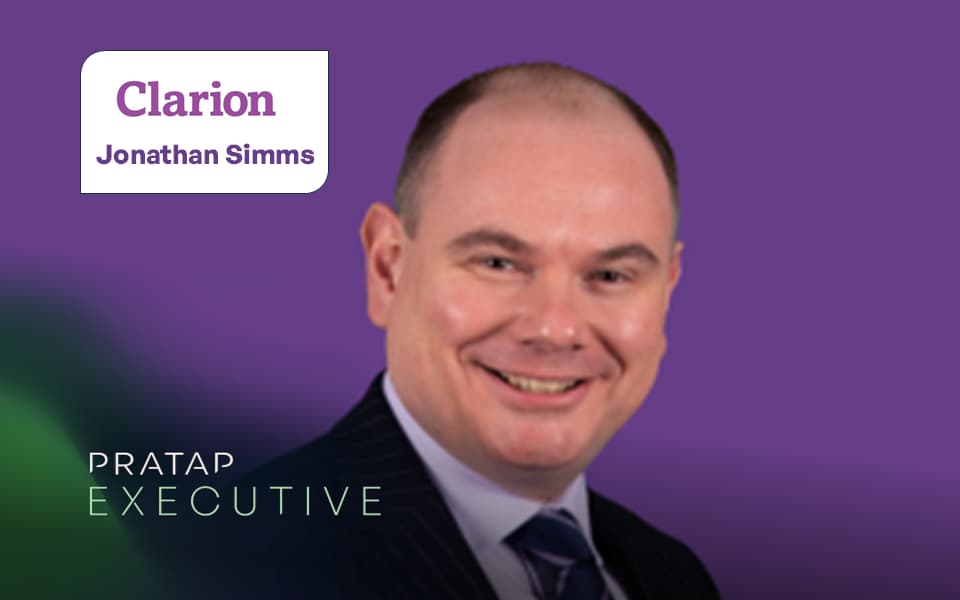
Jonathan Simms is Corporate Partner at Clarion. He is widely recognised as one of the busiest dealmakers across Yorkshire, advising founders, management teams and investors on a wide range of corporate transactions.
One of the largest corporate teams in Yorkshire, Clarion plays a central role in many of the region's most significant transactions. The strength in depth within the team has allowed them to work on larger transactions, which require several lawyers working on the deal at once. The firm works closely with businesses across the UK as well as national and international investors, supporting companies through acquisitions, disposals, investment rounds and strategic growth. These transactions are not only in the UK but are also throughout Europe, the US, and Asia.
In 2025, the deal size and complexity of the transactions the team have acted on have developed, for example, the team has acted on four deals in excess of £100m, and 10 deals in excess of £50m.
In this conversation, Jonathan shares his perspective on the current M&A environment in Yorkshire, the issues increasingly shaping negotiations and what businesses should be thinking about as they plan for growth, investment or exit.
How would you describe the current M&A environment across Yorkshire and the wider region?
If you had asked me a few weeks ago, before the war in Iran, I would probably have been slightly more positive. I guess that is the nature of the world today. In all seriousness, deal activity is not bad. Deals are still getting done, and there is a decent pipeline in terms of both quantity and quality.
The market has been through a period of adjustment following the budget, a budget that certainly had an impact on business owner confidence and deal activity. For all businesses, particularly those that are people-heavy, the combination of NIC increases and pension changes landed at the same time. Add to this the Employment Rights Act 2025 that comes into play this year it is set to be busy for business leaders.
The business property relief changes are having a big impact of the regions family owned businesses.
All of these have forced a period of reassessment for shareholders and investors, prioritising their time on looking inward rather than outward. It has been about stabilising, understanding the impact of those changes and then deciding what comes next, ensuring they have their house in order to ensure they are a resilient business.
Private equity is certainly looking more outward now with capital needing to be deployed, funds are widening their lens beyond the most competitive core assets, showing greater flexibility on structure, and increasingly backing management teams and sector theses where they can drive value rather than simply buy it.
Business always finds a way; we are a nation of entrepreneurs. You can argue that current government policy has had an adverse effect on deal confidence, but as I said we are still doing deals. Activity is not that far below volumes from two to three years ago.
However, deals are certainly harder, everything is more detailed now. Financial diligence, tax and legal are all being looked at much more closely. Transactions are still happening, but they are slower and more considered.
What factors are currently driving deal activity and investment in the Yorkshire market?
There are two things I would bring up here:
- Business Owner Mindset
- Hot Sectors
On the first point, there is a reasonable cohort of business owners who are feeling a little battered and bruised by the events of recent years. This has a cumulative effect and impacts exit planning. They want to derisk and take some cash out. Macroeconomic events have a significant impact on shareholder confidence, and as events in the Middle East unfold, there is no doubt that they will have an impact on the market today and further down the line.
But, opportunities always emerge in declining markets. Five-year plans will be reduced to two-year plans, expectations for an 8x multiple will be reduced to a 6x multiple, and PE will swoop for good deals. It is too easy to focus on the threats, let us balance that with the upside and see where the opportunities are! The message to business owners is, “There are plenty of people out there who will lend you money, invest in you, and if you have the right ideas and sector approach, you can do very, very well in the current market.”
We are seeing a big rise in the volume of international investment from Europe and North America. Yorkshire and the UK in general is an attractive proposition, a large population of consumers willing to spend money. We are very much seen as a place to do business and a relatively easy place to do business.
The advice to every business owner is to take the right advice, regularly review the strategy and be as savvy in your market as possible.
On the second point, the two hot sectors are energy and infrastructure. The government is investing in these sectors. These are exciting times for these sectors, and if you are anywhere near them, the immediate outlook is very positive.
Other sectors that are also performing well include the pet care sector (on the back of the sharp rise in pet ownership during lockdown). The regulation sector is also flourishing, examples being building control and fire safety.
I have to mention AI. There are of course opportunities to enhance business performance, but there are challenges for the tech sector. Products are being rushed to market which can be both a risk for users and a threat for the sector. We are at the cusp of the wave for the evolution of this sector; it is inevitable that there are many opportunities ahead, but there will be some mistakes on the road as well.
Are you seeing any noticeable changes in how transactions are being approached or structured?
There has been no dramatic shift in structure, but there is definitely a change in mindset.
We are seeing more cash up front, often at slightly lower multiples. Vendors are increasingly saying they would rather take the money now and remove some of the risk, rather than rely on earn-outs or deferred consideration.
At the same time, buyers are spending more on diligence and taking a much closer look at the detail before completing.
Regulation is also adding complexity. The number of deals requiring NSI clearance has increased significantly. The legislation is very broad, and that is introducing additional steps and considerations into transactions.
Overall, it is less about fundamentally different structures and more about a greater focus on certainty and detail.
There are reasons why deals for “people-heavy” businesses and sectors is cooling down. They are under pressure from two sides. Firstly, the emergence of AI at the expense of some labour input. Secondly, the tax changes on employment and the pending Employment Rights Bill. It is a wider point, but there is a consideration from many businesses to consider the human capital versus AI investment question.
The current position of Private Equity is interesting and positive for vendors. There is a major appetite for deals, but with a relatively low number of attractive assets. This means that they are all circling over some of the same businesses and creating competition.
What are some of the issues that most often shape or influence negotiations in a transaction today?
Certainty is the biggest driver.
Vendors want to know exactly what they are getting on day one. That is why we are seeing more use of lock box mechanisms rather than completion accounts. There is less appetite for adjustments post completion.
There is also a supply and demand dynamic at play. There are not that many truly high-quality businesses coming to market, so when one does, it attracts a lot of interest.
That creates competitive tension and gives vendors more leverage in negotiations.
At the same time, investors are looking very carefully at future risks, particularly in people-heavy businesses. Employment regulation, cost pressures and broader economic uncertainty are all factors that are being scrutinised much more closely.
Leeds continues to be one of the most active deal centres outside London. What is it about the Yorkshire and Leeds market that continues to attract investors and deal activity?
Yorkshire has always had a strong and innovative business community, a community of quality, well networked businesses .
It is a very collegiate market. Advisors know each other well, investors are well-connected and business owners are open to sharing ideas and experiences. That creates an environment where deals can happen more naturally.
We are also seeing more large transactions staying in the region rather than moving to London. That reflects the strength and credibility of the advisory community here.
You can see the direction of travel as well. More firms are looking to enter Leeds than Leeds firms are looking to move elsewhere. That tells you something is compelling about the market.
Just look at some of the deals that have happened in the past year – BJSS, Hippo Digital and one of our recent deals at Redcentric. These are £100m plus deals that are regularly happening in our region. It is very impressive, and the fact that the deals are done up here, and not down in London, reflects very well on our region.
There is still huge potential, too. With the right investment in infrastructure, the region could go to another level entirely. We deserve it.
For business owners who may be considering investment or a sale in the coming years, what preparation should they be thinking about now?
Start preparing as early as possible.
There are always things that can be improved, and marginal gains made early can have a significant impact on value later. The earlier you take advice, the more opportunity you have to make those improvements and create more value.
Many advisers will have an initial discussion at no cost, which makes it a sensible way to test thinking and sense-check your approach. It is about learning, understanding your options and finding the right people to work with.
The other key factor is your management team. Bringing in the right CFO can be transformational. A good CFO will pay for themselves very quickly and can fundamentally change how a business operates. Great businesses have less value because they have poor data and MI. I have seen that benefit Clarion directly, our successful clients, and it is often a valuable piece of strong advice that I give to our clients.
It is about stepping back from the day-to-day and asking what good really looks like, then putting the right people and structure in place to achieve it.
Looking ahead to the next 12 to 18 months, how do you see deal activity developing across Yorkshire?
I think we will continue to see steady activity despite what happens on the global stage.
There will always be external factors that create uncertainty, but good businesses pivot and adapt, if what was achieved 6 years during covid. They find opportunities and move forward.
Yorkshire has strong businesses and strong people, and that gives it resilience. Yorkshire’s trajectory is positive.

Nik Pratap - Managing Partner
Click here to access our 2025/26 CFO Network Annual Report